Quick Answer: Why Do Container Tomatoes Fail?
Container tomatoes most often struggle due to a mismatch between plant size and soil volume, combined with root-zone heat stress. Small containers dry out quickly, disrupt calcium transport, and increase the risk of blossom end rot.
- Micro-dwarfs: typically grown in 1–2 gallon containers
- Determinate/bush types: perform best in 5–10 gallons (8–10 recommended)
- Semi-determinates: benefit from 10+ gallon containers
Blossom End Rot is not caused by a lack of calcium in the soil, but by inconsistent watering that prevents the plant from transporting calcium to developing fruit. This is why adding eggshells does not solve the problem.
Dark plastic pots can overheat above ~113°F in direct sun, especially on west-facing sides during summer afternoons. Consistent watering and proper container sizing are the most critical factors for success.
Why Container Tomatoes Fail (And How to Fix It)
Problem
Stunted growth, blossom end rot, and frequent wilting in container-grown tomatoes.
Root Causes
- Container too small for plant size
- Rapid soil drying and inconsistent moisture
- Heat buildup along sun-exposed container walls
- Disrupted calcium transport within the plant
Fix
- Match plant type to container size
- Use larger containers to stabilize moisture
- Protect containers from direct afternoon sun
- Maintain consistent, even watering
The “Big Tomato in a Small Pot” Mistake
Planting an indeterminate vining tomato in a very small container (e.g., under ~10 gallons) significantly increases the risk of stunted growth and Blossom End Rot due to rapid moisture fluctuations and root restriction. Before looking at varieties, you must understand two biological realities that dictate small-space success.
By synthesizing internal calcium mobility data with soil moisture guidelines from Michigan State University Extension, it becomes clear that Blossom End Rot is an internal calcium deficiency triggered by drought stress, rather than a lack of soil calcium. Because calcium is only moved into the plant with an ample moisture supply, placing a massive plant in a tiny pot causes the soil to dry out rapidly. This extreme fluctuation cuts off the water transport system. Even if your soil is saturated with calcium, the drought stress prevents the plant from moving it to the developing fruit. To beat Blossom End Rot, you need a smaller genetic plant or a significantly larger soil volume to maintain consistent moisture.
The Dual-Baseline Strategy for Container Selection
Applying my proprietary Dual-Baseline Strategy matching the terminal genetic height of the plant strictly to the volumetric moisture-holding capacity and heat exposure characteristics of the container—eliminates the guesswork of patio gardening.
- The Flawed Approach: Purchasing an indeterminate vining tomato that naturally grows three to five feet long, and placing it in a tapered 3-gallon pot. The massive root system quickly binds, stunting growth and reducing overall vigor and requiring twice-daily watering just to prevent wilting. If you cannot accurately identify whether your nursery seedling is a genetically programmed bush or a sprawling vine, you are already gardening blind. Understand the crucial genetic differences in my foundational guide: Determinate vs. Indeterminate Tomatoes: Which Should You Grow?
- The Optimized Strategy: Select a compact bush-type or dwarf variety that is genetically programmed to stop growing, and place it in a straight-sided container at least 12 inches deep, ideally larger for improved moisture stability.
The 3 Categories of Container Tomatoes
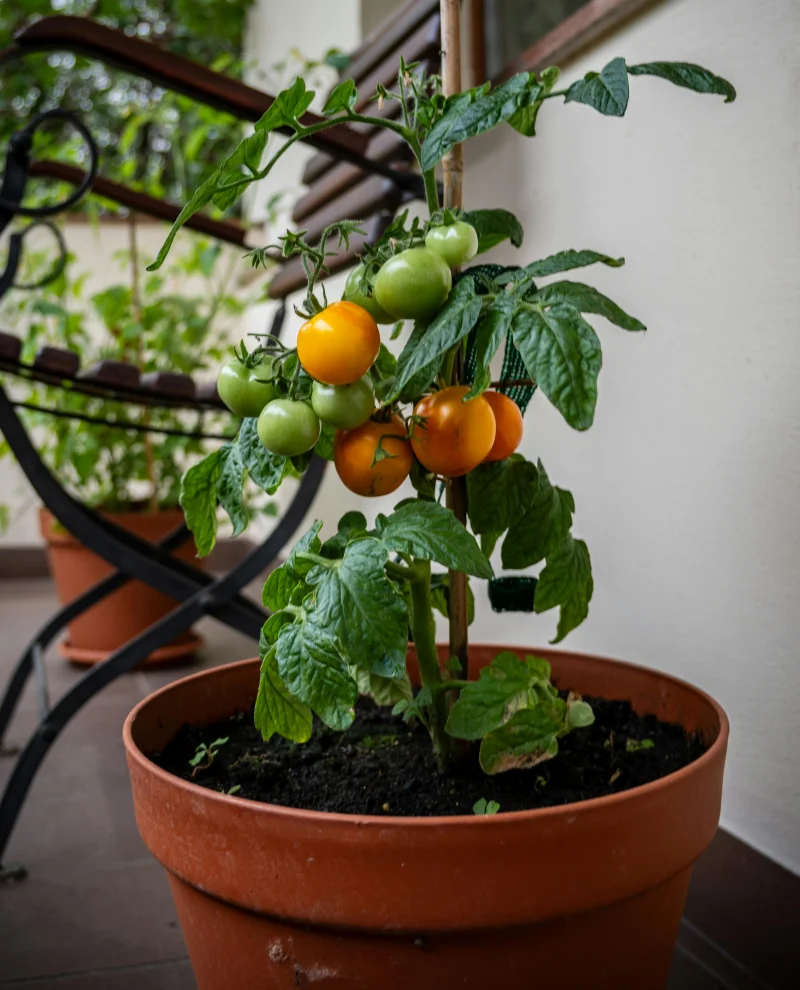
Choosing the correct tomato type for your container size is one of the most important factors for success.
To maximize your chances of a successful harvest, you should match the genetic size of the plant to the available soil volume.
Category 1: Micro-Dwarfs (For 1 to 2-Gallon Pots)
Micro-dwarfs max out at just 12 to 24 inches tall. These plants are specifically bred to produce a heavy yield of cherry tomatoes in highly restricted soil volumes. They require little to no staking and won’t dry out immediately in a small 1 or 2-gallon pot.
- Top Varieties: Micro Tom, Tiny Tim, Orange Hat.
Category 2: Determinates / Bush Types (For 5 to 10-Gallon Pots)
Determinate tomatoes reach a fixed height of about four to five feet and cease vertical growth because their terminal growing point ends with flowers and fruit. They yield a massive, concentrated harvest over a short four- to six-week window. By cross-referencing sizing guidelines from the University of Maryland and North Carolina State University Extension, I determine the container size for these standard vegetables is 5 gallons, with 8 to 10 gallons being optimal for vigorous production.
- Top Varieties: Patio F1, Bush Goliath, Roma.
Category 3: Semi-Determinates (For 10 to 15-Gallon Pots)
Semi-determinants are the sweet spot for container gardeners seeking prolonged harvests in limited space. These varieties continue to put out several flushes of growth, offering a larger, season-long yield than strict bush varieties without requiring large or complex support structures.
- Top Varieties: Celebrity, Husky Cherry Red.
Master Summary Table: The Dual-Baseline Sizing Matrix
The table below summarizes how plant size, container volume, and watering risk are connected:
| Tomato Category | Growth Habit | Minimum Soil Volume | Harvest Window | Container Vulnerability |
| Micro-Dwarf | Terminal (12-24 inches) | Typically 1–2 Gallons | Continuous | High (Dries out rapidly) |
| Determinate | Terminal (48-60 inches) | 5 to 10 Gallons | Concentrated (4-6 weeks) | Moderate |
| Semi-Determinate | Continuous Flushes | Typically 10+ Gallons | Season-Long | Low (If watered properly) |
Container Thermodynamics & High-Risk Heat Zones
Root tissues suffer direct, irreversible injury when exposed to temperatures between 113°F and 130°F for just 30 minutes. While the air temperature might feel pleasant, the environment inside your container can be lethal.
Based on thermodynamic field studies from University of Kentucky Extension, container-grown plants are highly vulnerable to heat buildup along sun-exposed container walls. Dark-colored plastic containers act as solar collectors; during the summer, temperatures near the west-facing wall can exceed 120°F during mid- to late afternoon.
However, the highest-risk zone is not fixed. While the west side is typically hottest in summer afternoons, the south-facing wall can also reach critical temperatures during spring and fall due to prolonged solar exposure. In practice, this creates a shifting “thermal danger zone” that moves with the sun throughout the day and season.
Furthermore, pot shape dictates root health. While many garden centers sell “tapered” pots, a tomato requires a container that is at least as tall as it is wide to support a large, well-developed root system.
The Execution Fix: To reduce high root-zone temperatures, use light-colored containers or breathable options such as fabric grow bags, which operate on similar principles to fiber containers shown in research to keep substrates 9°F to 18°F cooler than black plastic. If you must use dark pots, use a physical barrier or place the container inside a larger декоратив outer container to shade the sun-exposed side—especially the west-facing wall during hot summer afternoons.
FAQ
What size container is best for tomatoes?
Most tomatoes perform best in 8–10 gallon containers because larger soil volumes retain moisture more consistently. Smaller containers can work, but they require more frequent watering and careful management to avoid stress.
Can tomatoes grow in 5 gallon buckets?
Yes, tomatoes can grow in 5-gallon containers, especially determinate varieties. However, growth may be more limited, and maintaining consistent moisture becomes much more important to prevent stress and nutrient issues.
Why do tomatoes get blossom end rot in containers?
Blossom end rot is caused by inconsistent watering, which disrupts the plant’s ability to transport calcium to developing fruit. It is not caused by a lack of calcium in the soil, which is why adding eggshells does not solve the problem.
Do black pots make tomatoes grow worse?
Black plastic containers can absorb and retain heat, raising root-zone temperatures in direct sunlight. This can increase water loss and root stress, especially during hot afternoons, making temperature management more important.
Your Next Steps for a Maximum Yield:
Step 1: Nail the Timing. A perfect container won’t save a tomato planted too early. Stop guessing with generic spring advice and calculate your exact frost-free windows using my comprehensive timeline: When to Plant Tomatoes (The Dual-Baseline Strategy).
Step 2: Master the Maintenance. From exact N-P-K fertilizer ratios for containers to the correct way to prune a semi-determinate plant, get the complete step-by-step execution plan here: The Ultimate Master Guide on How to Grow Tomatoes.
Step 3: Fuel Your Growth. In containers, nutrients are flushed out of the drainage holes with every watering. To maintain high yields, you must apply the right N-P-K ratios at the specific biological stages of the plant. Read: The Best Fertilizer for Tomatoes: When, How, and What to Feed Them.
Behind the Data & Research Sources
To ensure practical accuracy, the strategies and recommendations in this guide are based on agricultural extension research and informed by established plant science principles, including:
- Michigan State University Extension: Blossom-end rot of tomato tip sheet
- University of Maryland Extension: Types of Containers for Growing Vegetables
- NC State Extension: 18. Plants Grown in Containers
- University of Kentucky Extension: Reducing Heat Stress to Container-grown Plants