Hello, I’m Yun, founder of The Planting Key. Of all the vegetables I’ve researched, none has a more fascinating or misunderstood “secret” than the onion.
For many new gardeners, planting onions is a gamble that ends in frustration—either the plants “bolt” (flower) prematurely or they produce bulbs the size of a marble. The truth is, their success or failure was decided the moment they planted.
Why? Because the #1 rule for planting onions is not just about temperature. It’s about a counter-intuitive biological trigger called Day-Length.
I have synthesized research from top agricultural universities to create this guide. Unlike generic calendars, the dates below are calculated specifically based on the frost dates of your zone.
This timing guide is a deep dive into step one of my How to Grow Onions. If you are looking for the full roadmap from soil prep to curing, make sure to start there.
Onion Planting Timing at a Glance
For Northern climates (Zones 4-6), plant Long-Day transplants in spring, 2 to 4 weeks before your last frost. Start seeds indoors 8-10 weeks before the last frost if growing from seed.
For Southern climates (Zones 7-9), plant Short-Day or Intermediate-Day transplants in late winter, 4 to 10 weeks before your last frost (typically December–February). Alternatively, you may direct sow in the Fall (8 to 10 weeks before the first fall frost) or Early Spring (6 to 8 weeks before the last frost).
However, the best planting date isn’t the same for everyone. Your ideal timing depends on your zone’s day-length pattern and your personal risk tolerance. That’s why I created The Planting Key’s Dual-Baseline Onion Calendar—a unique system that gives you two options: Aggressive Strategy (for maximum bulb size) or Safe Strategy (for guaranteed results).
Quick Jump to Your Zone: Zone 4 | Zone 5 | Zone 6 | Zone 7 | Zone 8 | Zone 9
The #1 Secret: Why “Day-Length” Beats Temperature
This is the “Ah-ha!” moment that separates successful onion growers from those who struggle.
Onions are “photoperiodic,” meaning they only start to form a bulb when the number of daylight hours hits a specific trigger. Unlike most vegetables that grow faster as the weather warms up, an onion bulb will not swell until the day reaches a precise length, regardless of the temperature.
The North-South Daylight Paradox
Most people assume the South has “more sun,” but when it comes to the number of daylight hours in summer, the opposite is true. Because of the Earth’s tilt, summer days are actually significantly longer in the North than in the South. This simple geographical fact is why choosing the correct variety for your zone is the single most important decision you will make.
1. Long-Day Onions (North: Zones 4-6)
- Trigger: These varieties require 14 to 16 hours of daylight to start bulbing.
- The Strategy: Because Northern summer days are long, these onions have months to grow massive green leaves before the summer solstice triggers the bulb to form.
- The Risk: If a Northerner plants a Short-Day onion, the bulb will trigger too early in spring while the plant is still tiny. The result? A puny, marble-sized onion.
2. Short-Day Onions (South: Zones 7-9)
- Trigger: These varieties require only 11 to 12 hours of daylight to start bulbing.
- The Strategy: Southern gardeners must plant in winter to establish roots and leaves before the days get too long in early spring.
- The Risk: If a Southerner plants a Long-Day onion, the 14-16 hour signal never arrives because Southern summer days usually peak at only about 14 hours. You will get lush green tops, but zero bulbs.
Pro Tip: What about “Intermediate-Day” Onions?
If you live in the transition zones (Zone 5b, 6, or 7), you might see “Intermediate-Day” varieties. These trigger at 12 to 13 hours of light. They are an excellent “safe bet” and are much more adaptable than the extreme types, making them perfect for gardeners who struggle with precise timing.
Method 1: The “High Success” Strategy (Transplants)
Recommended for: Beginners & Zones 4-9
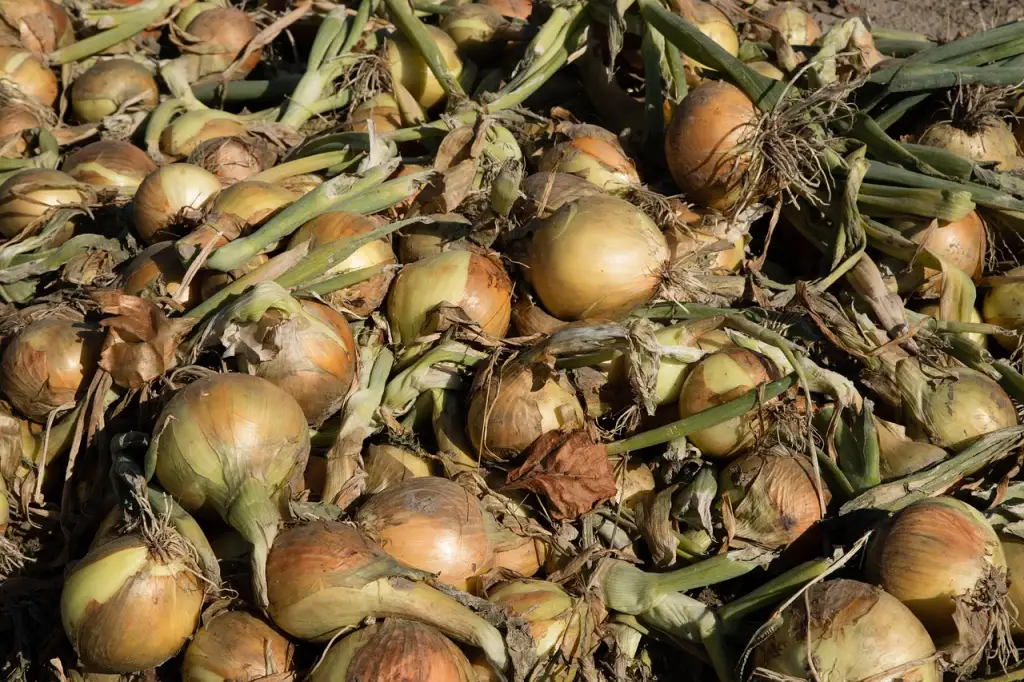
Starting with the right transplants helps ensure your onions don’t bolt and form solid bulbs. For most home gardeners—especially beginners—transplants (young seedlings about the thickness of a pencil) are the superior choice for three critical reasons:
- Avoiding the “Bolt”: UC Agriculture & Natural Resources warns that much of the energy in onion sets “seems to go into producing seed stock instead of bulbs.” They also note that unless sets are stored perfectly, they “tend to bolt” rather than produce a large onion. Transplants avoid these risks.
- The “Wrong Variety” Trap: A crucial insight from the University of Minnesota reveals that most onion sets available in their region are actually “Short-Day” varieties. Planting these generic sets in the North is biologically doomed to fail. Transplants are usually sold with accurate variety names.
- Easier Management: In the South, growing from seed requires careful weeding through the winter. For home gardeners, transplants offer a simpler, more reliable start than seeds.
The Northern Strategy (Zones 4-6)
Goal: Maximize leaf growth in cool spring, before the Summer Solstice triggers bulbing.
- Variety Type: Long-Day (or Intermediate-Day)
- The Challenge: You must plant early, but planting too early in frozen soil can stunt growth.
- The Rule: According to Cornell University, you should plant your transplants 2 to 4 weeks BEFORE your average Last Frost Date (LFD), as soon as the soil is workable.
The Southern Strategy (Zones 7-9)
Goal: Establish a strong root system in winter so the plant can explode with growth in early spring.
- Variety Type: Short-Day
- The Challenge: Do not wait for “Spring.” If you wait until your Last Frost Date to plant, it is too late. The days will already be too long, and the heat will stunt the bulbs.
- The Rule: Data from Texas A&M AgriLife Extension specifically recommends planting transplants 4 to 10 weeks BEFORE your average Last Frost Date.
- What This Means: In practice, for most Southern zones, this calculation places your optimal window in Late Winter (December – February). This timing allows the roots to establish in cool soil before the heat of spring arrives.
Method 2: Starting from Seed (Variety & Value)
Growing from seed is the most cost-effective strategy and offers access to hundreds of unique varieties that you simply cannot find as transplants or sets. However, because onion seeds are slow to develop, your timeline and location are critical.
Northern Gardeners (Zones 4–6): The Indoor Sowing Path
In the North, the growing season is too short to sow seeds directly into the garden. To get large bulbs, you must give your onions a significant head start indoors.
- The Strategy: Start your seeds in trays under grow lights.
- The Timing: According to Cornell University, you should sow seeds indoors 8 to 10 weeks before the last frost date.
- The Result: This ensures your seedlings are robust and “pencil-thick” by the time the spring soil is ready.
Southern Gardeners (Zones 7–9): The Direct Sowing Path
Southern gardeners have the unique advantage of sowing seeds directly into the garden soil.
- Fall Sowing (Best for Large Bulbs): Sow seeds 8 to 10 weeks BEFORE your first fall frost. These plants will overwinter and explode with growth in early spring.
- Spring Sowing: If you missed the fall window, you can direct sow in early spring, 6 to 8 weeks BEFORE your last frost.
- The Trade-off: While convenient, spring-sown onions have a shorter “leaf-growing” window. Since every leaf represents a ring on the bulb, having fewer leaves when the daylight trigger hits will result in significantly smaller onions compared to fall-sown or transplant methods
- Note: You must be diligent about weeding, as tiny seedlings cannot compete with aggressive winter weeds.
Starting from seed requires a bit more technical setup than transplants. For a full breakdown of grow lights, soil temperature, and tray management, see my Growing Onions from Seed: The Complete Advanced Guide.
Pro-Tip: Mind the Autumn-Winter Sowing Gap
When calculating your dates for Zones 7–9, you will notice a significant “gap” between the fall sowing window and the early spring window. I do not recommend sowing seeds during this period.
Why avoid this gap?
- The “Leaf-to-Bulb” Race: Onion success depends on leaf count. Every leaf equals one ring on the onion bulb. If you sow in late autumn (October–November), the cooling weather slows growth so much that the plant won’t develop enough leaves before the daylight trigger arrives in spring. You’ll end up with tiny, unusable bulbs.
- The Germination Temperature Floor: Onion seeds need a soil temperature of at least 50°F (10°C) for healthy, fast growth. Throughout late autumn and mid-winter, the soil temperature in most Southern zones drops below this threshold. Seeds sown in cold, wet soil are far more likely to rot than to sprout.
- Winter Survival Risk: Unlike seeds sown in early autumn, which have time to establish deep roots, “gap-period” seedlings are often too small and fragile to survive the random hard freezes that can occur in December.
Onion Planting Calendars (Transplants & Seeds)
Note: Unlike generic calendars that provide a single estimated date, the charts below calculates two distinct planting windows for each Zone using The Planting Key’s Dual-Baseline Methodology™. Please read the definitions below to determine if your gardening style matches my Aggressive Strategy or Safe Strategy.
Quick Zone Check by State
Not sure of your Zone? While exact zones vary by zip code, use this cheat sheet for common locations, or check the official USDA Zone Map here for precision.
- Deep South (TX, GA, FL, LA): Primarily Zones 8–9. Use the Southern Strategy (Short-Day onions).
- Transition South (NC, TN, AR): Primarily Zones 7–8. Follow the Southern Strategy.
- The Middle Ground (MO, VA, KY): Often Zones 6–7. Use the Intermediate-Day strategy.
- North/Midwest (OH, PA, IL, NY, MN): Primarily Zones 4–6. Use the Northern Strategy (Long-Day onions).
Don’t have enough garden space to follow these field-planting dates? Onions thrive in containers too. See my How to Grow Onions in Pots: The Small-Space Guide to Big Bulbs.
Understanding the Dual-Baseline Onion Calendar
Traditional planting calendars often provide just a single date, ignoring a critical fact: different gardeners have different goals. Some aim for the earliest possible harvest and are willing to protect their plants from frost or heat, while others prefer a stress-free approach that ensures a stable yield.
The Planting Key’s Dual-Baseline Methodology™ offers key planting dates for two distinct styles—Aggressive and Safe—to match your risk tolerance. Since the logic differs for spring and fall, please review the descriptions below to choose the strategy that best fits your gardening style.
For Spring Planting (Transplants & Indoor Seeds)
- Aggressive: For gardeners who want to get a head start. This involves planting as early as possible to maximize leaf growth before the summer solstice. You must be prepared to protect young plants from potential late frosts with row covers.
- Safe: For gardeners who prefer a cautious approach. This means planting slightly later to ensure minimal risk of frost damage to new seedlings from a late spring frost.
For Fall Planting (Direct Sowing in Zones 7-9)
- Aggressive: For gardeners who prefer waiting until late-summer temperatures are more moderate to reduce heat stress on young seedlings. This involves delaying your start date, which requires being prepared with protective measures against a sudden early frost before the seedlings are established.
- Safe: For gardeners who prioritize a guaranteed harvest. This means planting earlier in the fall season to ensure crops have enough time to establish a strong root system before the first frost of autumn arrives.
Accuracy is my priority. The key planting dates below are calculated based on representative Aggressive and Safe frost date baselines established for each zone. Because your garden’s microclimate may vary, I strongly recommend that you verify your local frost dates for the most accurate timing. Learn My Methodology & Find a Frost Date Tool Here.
Onion-Specific Timing Rules
- Outdoor Planting Calendar (Transplants): This is the gold standard. Dates are set 2–4 weeks before the last frost for the North and 4–10 weeks before the last frost for the South.
- Indoor & Direct Sowing Calendar (Seeds): For Northern gardeners (Zones 4–6), these dates are for starting seeds indoors 8–10 weeks before last frost. For Southern gardeners (Zones 7–9), these indicate direct sowing windows, set at 8–10 weeks before the first fall frost or 6–8 weeks before the last spring frost.
Want to Plan Your Entire Garden Year?
The table above gives you the perfect planting window for onions. But what about everything else?
To see how onions fits into your entire year’s schedule alongside 60+ other vegetables, herbs, and fruits, check out my complete, year-round planting calendar designed specifically for your zone.
Find Your Zone’s Complete Planting Calendar:
Zone 4 Planting Calendar | Zone 5 Planting Calendar | Zone 6 Planting Calendar | Zone 7 Planting Calendar | Zone 8 Planting Calendar | Zone 9 Planting Calendar
Understanding the Planting Windows & Risks
You might wonder: Why are the planting dates so specific? It comes down to one “Core Rule” of onion growing: The more leaves the plant has before bulbing starts, the larger your final onion will be.
Every leaf produces a ring on the onion bulb. If you have a huge plant with 12-15 leaves when the day-length trigger arrives, you get a colossal onion. If you have a tiny plant with 4 leaves, you get a tiny onion.
This creates a race against time: You must plant early enough to grow those leaves, but not so early that you kill the plant with cold.
The Danger Zone: The Risk of Bolting
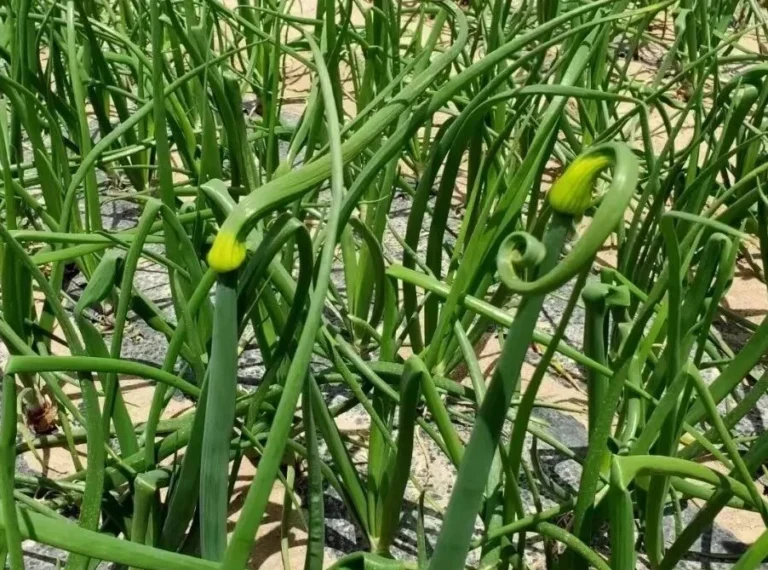
“Bolting” is when an onion sends up a flower stalk instead of swelling its bulb. Once an onion bolts, the bulb stops growing and becomes tough/inedible. It is a stress response usually triggered by temperature swings, not day length.
Risk 1: The “False Winter” (Planting Too Early) While we want to plant early, there is a danger. If young plants (especially sets or large transplants) are exposed to prolonged temperatures below 50°F (10°C) and then suddenly warm up, the plant is “tricked.” It thinks it has lived through a winter and matured, so it decides to flower (bolt).
- The Fix: Stick to the “Safe” dates in the calendar if your spring weather is wildly unpredictable. Use row covers to buffer temperature swings.
Risk 2: The Set Size Trap If you choose to use sets (small bulbs) instead of transplants, size matters. Utah State University research found that sets larger than 5/8 inch in diameter (about the size of a dime) are significantly more prone to bolting.
- The Fix: If you buy a bag of sets, sort them. Plant the smallest ones (dime-sized or smaller) for bulbs. Use the larger ones only for green onions (scallions), as they will likely flower before making a bulb.
If your onions have already started sending up flower stalks despite your best timing efforts, don’t panic. Discover if your bulbs are still edible in Why Is My Onion Flowering? (Bolting Explained & Can You Still Eat It?)
Timeline: How Long Until Harvest?
- From Transplants (85–100 Days): This is the fastest route to harvest because the 8–10 weeks of early growth happened before the plants hit your soil.
- From Spring Seeds (100–175 Days): This represents the full lifecycle. It includes the time spent germinating and the slow initial growth phase as a seedling.
- From Fall Seeds (210–250 Days): While the seeds are in the ground for a long time, they spend the winter building a massive root system. The “active” bulbing phase is only about 110–140 days, but the total time from autumn sowing to summer harvest is much longer.
- Green Onions (50–70 Days): If you are looking for a faster reward, you can harvest thinnings from any of the bulb onion methods in about two months. For those who want a constant supply of fresh scallions all season long, don’t miss my How to Grow Green Onions: The Ultimate “Endless Harvest” Guide.
Key Factors for Success
1. The Soil Temperature Signal
While onions are cold-hardy, they go dormant if it’s freezing. Cornell University suggests waiting until the soil temperature reaches at least 50°F (10°C) for the fastest vegetative growth.
2. Fertility Matters
Onions are heavy feeders. Because they have shallow roots, they need consistent nitrogen to grow those big green leaves.
- Pro Tip: Stop fertilizing when the bulb starts to swell (when the ground cracks around the stem). Fertilizing too late prevents the bulb from curing properly for storage.
3. Protection
- North: If a hard freeze (below 28°F) is threatened after planting, cover your transplants with a floating row cover.
- South: Onions planted in Jan/Feb are generally hardy, but if temperatures drop into the low 20s°F, mulch or cover them to prevent cold damage to the young tips.
During the long wait for harvest, your onion leaves are the best messengers of plant health. If they start looking pale, use my diagnostic key to fix it: Why Are My Onion Leaves Turning Yellow?
Frequently Asked Questions (FAQ)
Your Next Step: Learn How to Grow
You have now mastered the “when”—the most critical step for success. You know your regional planting window and why Transplants are your best bet.
Now, you are ready to master the “how.”
My complete, pillar guide covers everything from preparing the perfect soil and spacing your transplants to mastering the “Neck Check” for harvest time.
Ready to grow? Read my pillar guide: