Gardening in USDA Zone 9 presents a completely different challenge than the rest of the country. In the subtropical climate of Zone 9, planting tomatoes is a race against the sun.
If you rely on a single, generic calendar date you find online, you are taking a massive risk. If you transplant too late, especially in warmer climates, the plants will hit the mid-summer heat wall—where daytime temperatures exceed 85°F (29°C) or nighttime temperatures stay above 70°F (21°C), causing pollen to become tacky and non-viable. This makes successful pollination nearly impossible, often causing the stressed plant to simply drop its blossoms without producing fruit.
To help you navigate this unique subtropical climate, I have created a Free Printable 2026 Tomato Planting Cheat Sheet (PDF). It features a dual-season timeline offering exact Spring windows and Fall windows to help gardeners dodge frost and brutal summer heat.
🔍 Not sure if you are in Zone 9?
Microclimates can trick you! Before you download this calendar, I highly recommend double-checking your exact zip code on the Official USDA Plant Hardiness Zone Map. (It takes 5 seconds!)
(Check the preview below, and scroll down to have the high-res printable version sent to your inbox!)
Why Zone 9 Needs a Specialized Tomato Calendar
While spring is the primary focus for most gardeners in temperate regions, the subtropical climate of Zone 9 allows for both spring and fall planting seasons to work in tandem. Your ultimate goal is to establish healthy transplants that can fully mature within the narrow windows of optimal 70-80°F (21-27°C) growing temperatures. Following guidance from experts like the Texas A&M AgriLife Extension, spring transplanting typically occurs 1 to 8 weeks after the last spring frost. Additionally, to secure a successful second harvest, fall crops must be transplanted approximately 12 to 14 weeks before the average first fall freeze date.
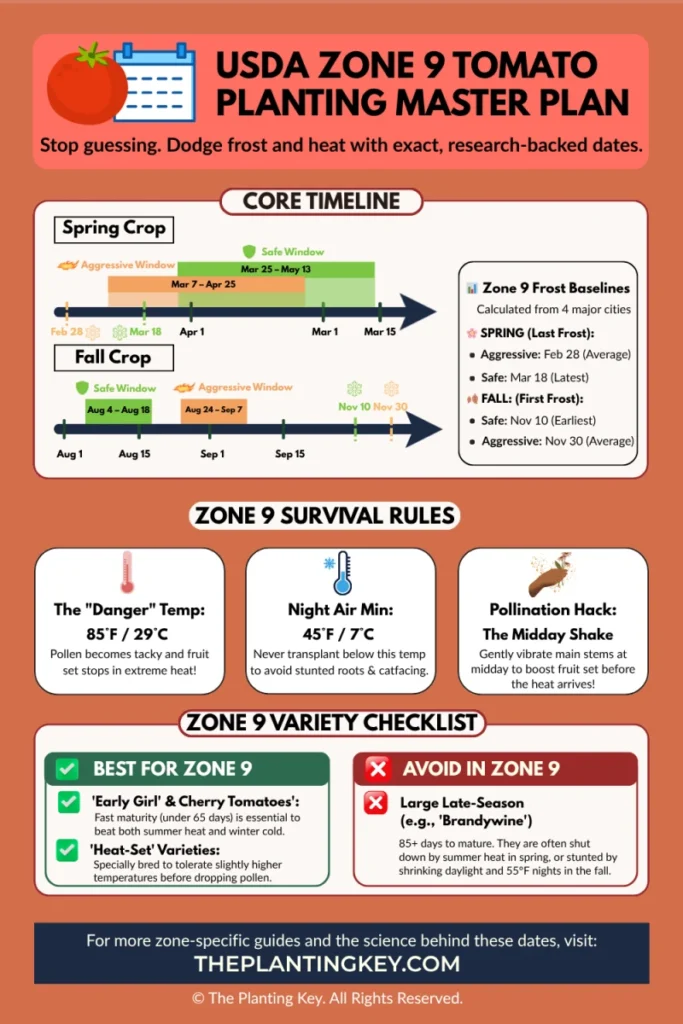
To solve this, my printable chart uses The Planting Key’s Dual-Baseline Methodology™. It offers key planting dates for two distinct styles—Aggressive and Safe—to match your risk tolerance.
Your Zone 9 Transplanting Windows (Spring & Fall)
Here are the exact dates you will find in your printable guide:
The Spring Crop (The Race Against the Sun)
The Aggressive spring strategy targets the earliest possible window, risking minor frosts to ensure the crop sets fruit before the extreme heat of early summer sterilizes the pollen.
- Spring Transplanting (Aggressive): Mar 7 – Apr 25
- The Strategy: This is the highly recommended window for Zone 9. By planting early, you give your tomatoes a massive head start to set fruit before the brutal mid-summer heat wall arrives—where temperatures over 85°F (29°C) cause pollen to become non-viable. Just keep frost blankets handy for unexpected late cold snaps, as the reward of beating the summer heat makes it completely worth the risk!
- Spring Transplanting (Safe): Mar 25 – May 13
- The Strategy: If you hate monitoring the weather for frost, this is your window. By waiting, you ensure nighttime temperatures consistently stay above 45°F (7°C), protecting your new seedlings from stunted root growth and fruit deformities like catfacing. However, you are racing against the clock. You must use fast-growing, early-season varieties, or the impending summer heat will stop fruit production before you get a meaningful harvest.
The Fall Crop (Your Second Harvest Opportunity)
In warmer and transitional climates, a second fall crop is your secret to a massive late-season yield.
- Fall Transplanting (Safe): Aug 4 – Aug 18
- The Strategy: This is your best bet for a guaranteed second harvest. By planting earlier in the season, you ensure your crops are fully mature before the first frost of autumn arrives. Because you are transplanting while the summer heat is still intense, you will need to provide consistent moisture and heavy mulch immediately to help the young seedlings establish their roots without burning up.
- Fall Transplanting (Aggressive): Aug 24 – Sep 7
- The Strategy: This is a strict Heat-Avoidance strategy. By delaying your start date, you reduce severe heat stress on your young seedlings. However, this is a high-risk gamble against the calendar. You must use the fastest-maturing varieties available to ensure they yield fruit before shrinking daylight and cold autumn nights slow their growth, and you must be prepared with frost blankets for a sudden early frost.
Transparency is my priority. Verify the exact climate data and representative cities behind these Dual-Baselines on the My Research Data page.
Best Tomato Varieties for Zone 9
To succeed in Zone 9, you need to pay close attention to your variety’s Days to Maturity (DTM). A fast-growing tomato variety needs about 60 days to reach maturity (DTM), plus at least another 3-4 weeks to yield a meaningful, continuous harvest.
- Early-Season Varieties (Under 65 Days): Varieties like Early Girl or most cherry and grape tomatoes are perfect for Zone 9 spring planting. They grow quickly and set fruit dependably before the 85°F (29°C) heat wall shuts down your production.
- Heat-Tolerant Varieties: Look for seed packets labeled “heat-set,” which are specifically bred to tolerate slightly higher temperatures before their pollen drops.
- ⚠️ Warning for Spring: Avoid Late-Season Varieties. Large, late-season varieties that require 85+ days to mature—like ‘Brandywine’ or large ‘Beefsteaks’—are extremely risky in the spring. The summer heat will arrive and shut down fruit production long before these varieties have a chance to finish growing! (Pro tip: Because shrinking autumn daylight slows down plant growth, late-season varieties are challenging for fall planting, too. Stick to fast-growing, shorter-season varieties for your fall crop to guarantee a yield! )
Download Your Free Zone 9 Printable Calendar
Don’t let the southern heat ruin your harvest.
Enter your email below to unlock my Printer-Friendly PDF library. I’ll send this high-resolution cheat sheet straight to your inbox, so you can pin this high-resolution cheat sheet in your garden shed so you never miss a window!
Curious about how I calculate these dates? Read my full breakdown of the Dual-Baseline Tomato Planting Methodology (Zones 4-9) to learn why your microclimate matters.