When is the exact right time to plant potatoes?
For most cool climates (Zones 4-6), plant seed potatoes in early spring, 2 to 4 weeks before your last expected frost date, once soil reaches 40°F.
For hot climates (Zones 7-9), plant 4 to 6 weeks before the last frost to avoid summer heat. A second fall crop can be planted 14-16 weeks before the first winter freeze.
However, the best planting date isn’t the same for everyone. If you rely on a single, generic calendar date you find online, you are taking a massive risk. If you plant too early in cold, wet soil, your seed potatoes will rot before they sprout. If you plant too late, especially in warmer climates, the summer heat will stop the tubers from growing just as they are getting started.
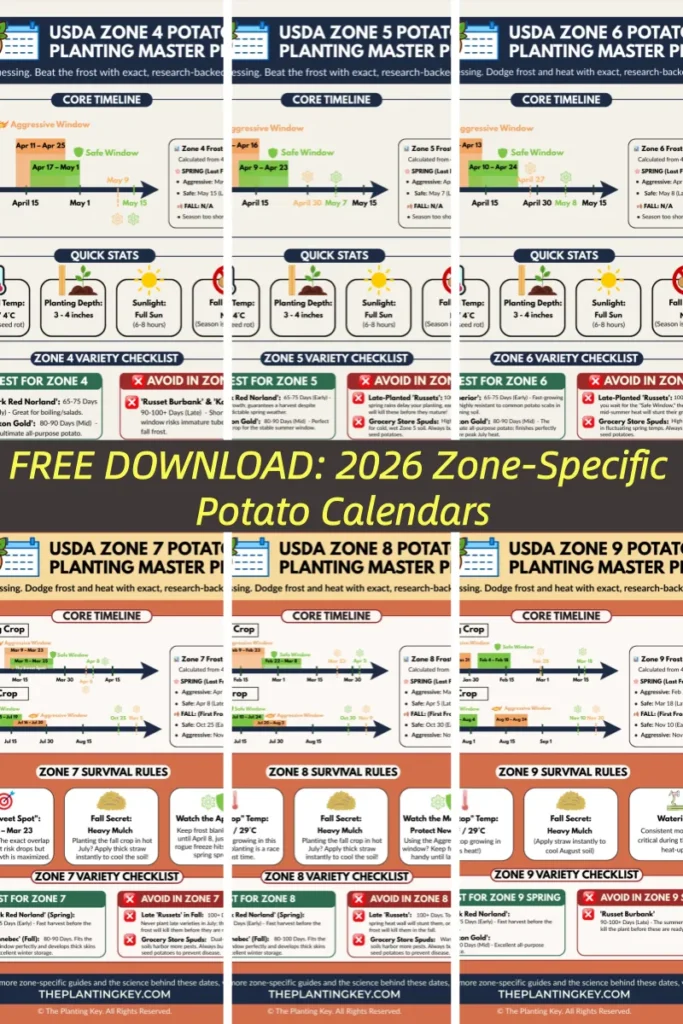
Your ideal timing depends on your climate zone and your personal risk tolerance. That’s why I created The Planting Key’s Dual-Baseline Potato Calendar—a unique system that gives you two options: Aggressive Strategy (for a head start) or Safe Strategy (for guaranteed results).
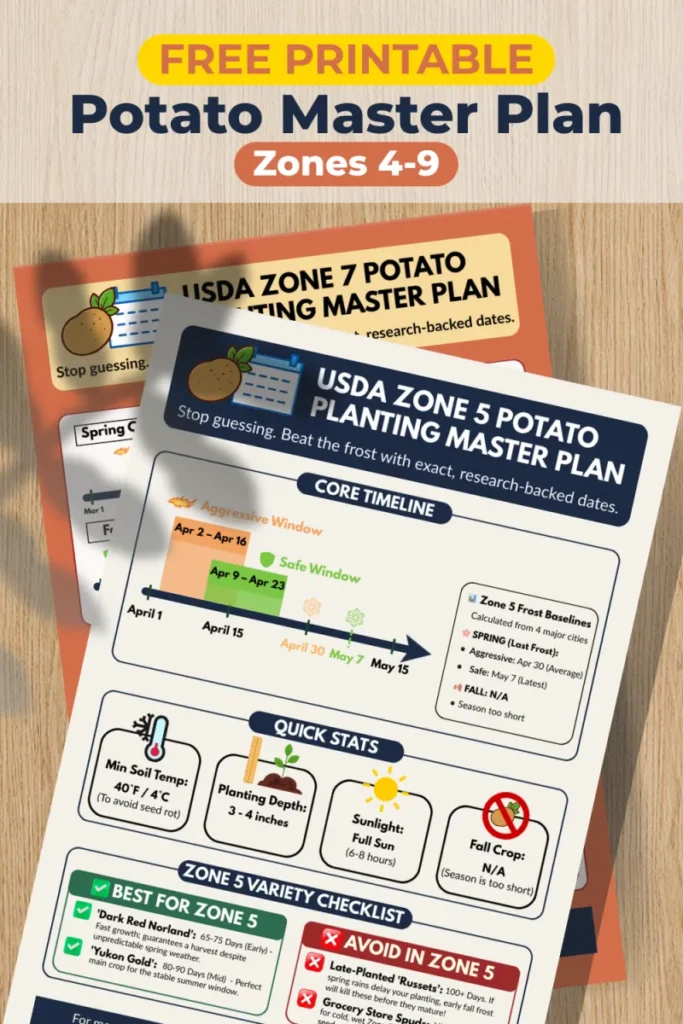
Get the exact planting dates for your climate. Download and print your high-res guide 👇
The Best Time to Plant Potatoes by Zone
The best time to plant potatoes depends entirely on your climate’s core challenge: avoiding seed rot from cold soil, or avoiding tuber failure from intense heat. This is why the planting rule changes depending on your region.
- For most gardeners in temperate or cold climates (Zones 4-6), the general rule is to plant in early spring, 2 to 4 weeks before your last expected frost date. This guideline is confirmed by experts at universities like Cornell and the University of California. However, strictly following this calendar rule can be risky. Planting in cold, wet clay soil is the biggest cause of seed rot. That is why my ‘Safe’ dates in the schedule below adjust for this risk. They ensure the soil has warmed above the critical 40°F (4°C) threshold, fixing the common issue with standard frost-date calculations.
- For gardeners in hot climates (Zones 7-9), the strategy is different. The enemy is summer heat, so planting must happen earlier, at 4 to 6 weeks before the last frost date, following guidance from hot-climate experts like the Texas A&M AgriLife Extension. A second planting window also opens in late summer for a fall crop, which, for most hot climates, is planted 14 to 16 weeks before your average first fall frost date.
Potato Planting Calendar (USDA Zones 4-9)
Note: Unlike generic calendars that provide a single estimated date, the chart below calculates two distinct planting windows for each Zone using The Planting Key’s Dual-Baseline Methodology™. Please read the definitions below to determine if your gardening style matches my Aggressive Strategy or Safe Strategy.
Understanding the Dual-Baseline Potato Calendar
Traditional planting calendars often provide just a single date, ignoring a critical fact: different gardeners have different goals. Some aim for the earliest possible harvest and are willing to protect their plants from frost or heat, while others prefer a stress-free approach that ensures a stable yield.
The Planting Key’s Dual-Baseline Methodology™ offers key planting dates for two distinct styles—Aggressive and Safe—to match your risk tolerance. Since the logic differs for spring and fall, please review the descriptions below to choose the strategy that best fits your gardening style.
For Spring Planting:
- Aggressive: For gardeners who want to get a head start. This involves planting earlier and being prepared to protect young plants from potential late frosts.
- Safe: For gardeners who prefer a cautious approach. This means planting later to ensure minimal risk of frost damage to new seedlings from a late spring frost.
For Fall Planting (Zones 7-9):
- Aggressive (Heat-Avoidance Strategy): For gardeners who prefer waiting until temperatures are more moderate to reduce heat stress on young seedlings. This involves delaying your start date, which requires being prepared with protective measures against a sudden early frost.
- Safe: For gardeners who prioritize a guaranteed harvest. This means planting earlier in the season to ensure crops are fully mature before the first frost of autumn arrives.
Accuracy is my priority. The key planting dates below are calculated based on representative Aggressive and Safe frost date baselines established for each zone. Because your garden’s microclimate may vary, I strongly recommend that you verify your local frost dates for the most accurate timing. Learn My Methodology & Find a Frost Date Tool Here.
Potato-Specific Timing Rules
The key planting dates in my calendars are calculated based on the following authoritative growing rules:
Spring Planting: (Primary Method for most zones)
These dates are for planting seed potatoes (Not sure if you can use the spuds currently in your pantry? Before you plant, read my guide on Seed Potatoes vs. Store-Bought: Can You Plant Grocery Store Potatoes to avoid introducing diseases to your soil). My calendar uses a two-part climate-specific rule to provide the most accurate advice for your location, as the strategy for cold climates is the opposite of the strategy for hot climates.
- For Zones 4-6 (Temperate/Cold Climates): The planting window is set at 2 to 4 weeks before your average last spring frost date, following guidance from institutions like Cornell University. In these regions, the goal is to wait until the soil is “workable” and has warmed above the absolute minimum (40°F/4°C) to avoid seed rot, as planting too early in cold, wet soil is the biggest risk.
- For Zones 7-9 (Hot Climates): The planting window is set earlier, at 4 to 6 weeks before your average last spring frost date, following guidance from hot-climate experts like the Texas A&M AgriLife Extension. In these regions, the biggest enemy is summer heat. The goal is to plant as early as possible (risking frost) to ensure the potatoes can fully mature before the intense heat of early summer arrives and stops tuber production.
Fall Planting: (For Warmer Zones 7+)
These dates are for planting seed potatoes. The planting window must be calculated by counting backward from your average first fall frost date. My calendar uses the authoritative rule recommended by top university extension programs, such as the Texas A&M AgriLife Extension, which sets the planting window at 14 to 16 weeks before your average first fall frost date.
This timing is critical and presents a significant challenge: you will be planting in the hottest part of the year (late July to August). The goal during this period is not for the plant to thrive or form tubers, but simply to survive the heat. To have any chance of success, you must apply a thick layer of organic mulch (like straw or shredded leaves) immediately after planting to keep the soil as cool and moist as possible, and you must water consistently.
Once the intense heat finally breaks in early fall, the established plants will then have just enough time to produce a full harvest in the cool, mild weather before the first hard frost kills the plant. For this crop, I always recommend choosing an early- or mid-maturing variety.
A Critical Note for Warm-Climate Gardeners (Zones 7-9)
My timing rules for fall are based on a simple, scientific goal: harvesting before your first fall frost kills the plant. This often means planting in the heat of late summer (August) to allow enough time for maturation.
You may see conflicting advice online suggesting planting in October. That advice is only intended for truly frost-free, subtropical regions (like Florida or coastal California) where potatoes can safely grow all winter. For any gardener in a region that does get a frost, you must use this frost-date-based calendar—supported by university research—to avoid a failed crop.
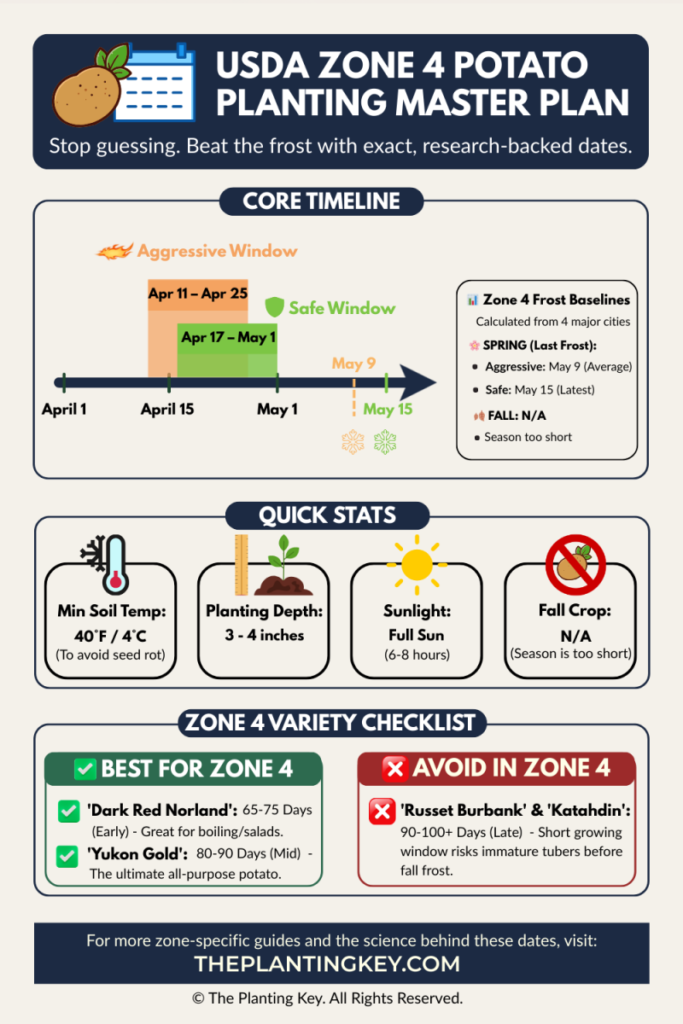
(Don’t rely on generic internet dates! Use the master plan above to find your exact aggressive and safe windows based on Zone 4’s notoriously short growing season.)
(Pin this high-resolution cheat sheet in your garden shed so you never miss a window!)
Why this specific timing matters for Zone 4
In Zone 4, where the growing season is notably short, both strategies offer distinct advantages. Choosing the Aggressive window maximizes your limited growing days to produce larger tubers, though it may require frost protection for early sprouts. Conversely, following the Safe window ensures your soil has consistently surpassed the critical 40°F (4°C) threshold, which is the best defense against seed rot in the typically damp, cold springs of the North.
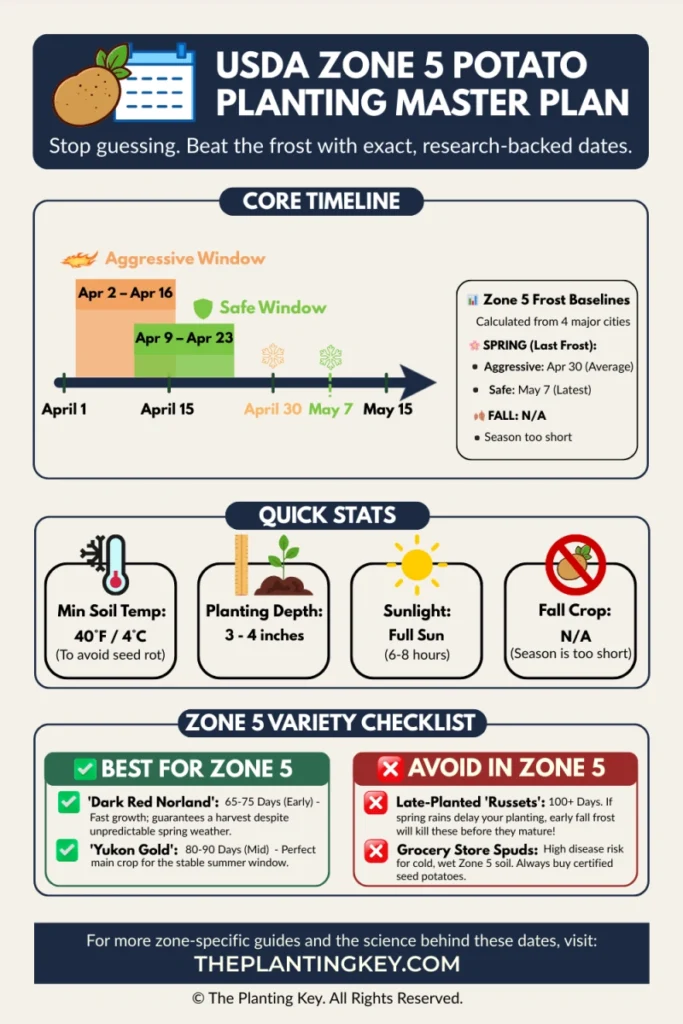
(Don’t rely on generic internet dates! Use the master plan above to navigate unpredictable spring temperature swings and avoid the “Fool’s Spring” trap.)
(Pin this high-resolution cheat sheet in your garden shed so you never miss a window!)
Why this specific timing matters for Zone 5
Zone 5 gardeners often face unpredictable spring temperature swings. The Aggressive strategy allows you to take advantage of early soil thaws, giving your potatoes a head start before any potential early summer heat. However, the Safe strategy is equally valid, especially for those with heavy clay soils that take longer to dry and warm, as it prioritizes a guaranteed sprout over early-season speed.
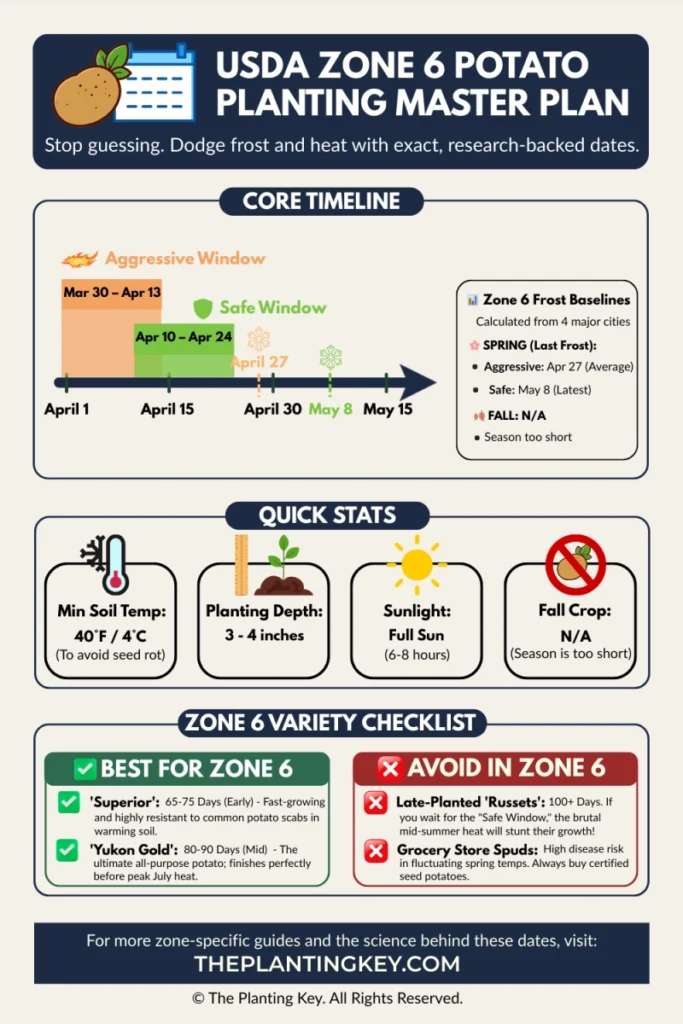
(Don’t rely on generic internet dates! Use the master plan above to thread the needle between late spring frost and mid-summer humidity.)
(Pin this high-resolution cheat sheet in your garden shed so you never miss a window!)
Why this specific timing matters for Zone 6
As a prime temperate region for potatoes, Zone 6 offers flexibility. The Aggressive window aligns with the goal of harvesting before the peak humidity of mid-summer, reducing the pressure from certain pests and diseases. Meanwhile, the Safe window provides a stress-free experience, waiting for the most stable weather patterns of spring to ensure consistent growth without the need for protective row covers.
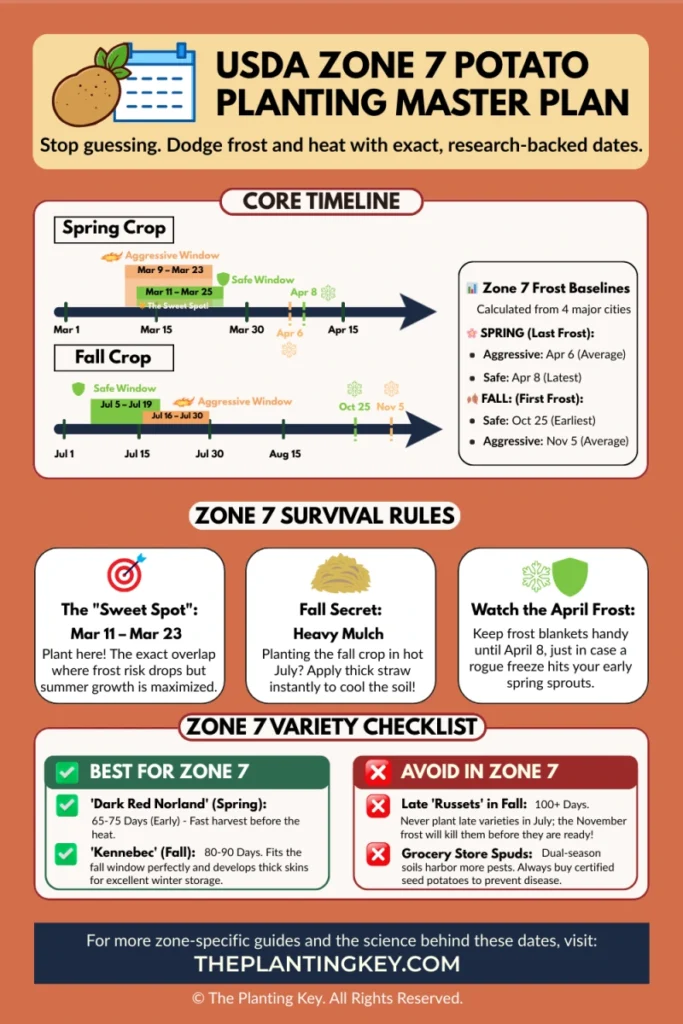
(Don’t rely on generic internet dates! Use the master plan above to hit the Spring “Sweet Spot” and unlock your secret Fall harvest.)
(Pin this high-resolution cheat sheet in your garden shed so you never miss a window!)
Why this specific timing matters for Zone 7
In Zone 7, the transition from spring to summer can be rapid. The Aggressive strategy is a popular choice for those looking to finish their harvest before soil temperatures hit the 90°F (32°C) “heat deadline” mentioned by experts like Utah State University. At the same time, the Safe strategy remains a robust option for gardeners who prefer to skip the volatile late-winter frosts and plant during the most reliable spring window.

(Don’t rely on generic internet dates! Use the master plan above to beat the brutal spring heat wall and plan your winter storage crop.)
(Pin this high-resolution cheat sheet in your garden shed so you never miss a window!)
Why this specific timing matters for Zone 8
For Zone 8, the “Dual-Baseline” approach is essential for navigating the heat. An Aggressive spring start is a strategic “Heat-Avoidance” move, prioritizing early tuber development before intense summer sun. Alternatively, the Safe window ensures the plant avoids early-season frost stress entirely. For the fall crop, both windows are calculated to help plants survive the late-summer peak so they can mature during the mild autumn.
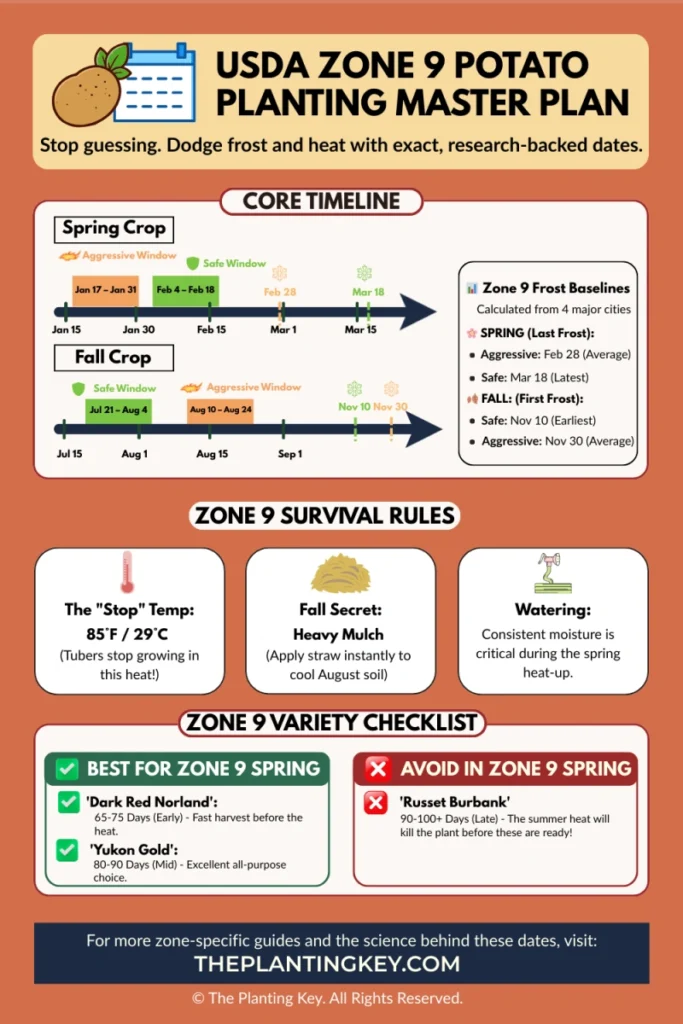
(Don’t rely on generic internet dates! Use the master plan above to race against the sun in your unique subtropical climate.)
(Pin this high-resolution cheat sheet in your garden shed so you never miss a window!)
Why this specific timing matters for Zone 9
In the subtropical climate of Zone 9, planting timing is a race against the sun. The Aggressive strategy targets the earliest possible window in January, risking minor frosts to ensure the crop matures before the extreme heat of early June. The Safe strategy waits for more settled late-winter weather while still maintaining a viable harvest window. Both options work in tandem with fall planting to provide year-round potato production.
Want to Plan Your Entire Garden Year?
The table above gives you the perfect planting window for potatoes. But what about everything else?
To see how potatoes fits into your entire year’s schedule alongside 60+ other vegetables, herbs, and fruits, check out my complete, year-round planting calendar designed specifically for your zone.
Find Your Zone’s Complete Planting Calendar:
Zone 4 Planting Calendar | Zone 5 Planting Calendar | Zone 6 Planting Calendar | Zone 7 Planting Calendar | Zone 8 Planting Calendar | Zone 9 Planting Calendar
Understanding the Planting Windows
Spring Planting: A Tale of Two Strategies
Spring planting is the standard method, but the “when” depends entirely on your climate’s biggest enemy.
In Hot Climates (Zones 7-9): The main enemy is summer heat. You must plant earlier, at 4 to 6 weeks before the last frost. This is a race against the clock. The goal is to get the plants in the ground (risking frost) to ensure they can mature before the intense heat arrives and stops tuber production.
In Cold Climates (Zones 4-6): The main enemy is cold, wet soil. As my calendar shows, you should plant 2 to 4 weeks before the last frost. This is a balancing act—waiting for the soil to warm just above 40°F (4°C) to prevent rot, while still planting early enough for the long growing season.
Fall Planting: The High-Risk, High-Reward Window
In warmer climates (Zones 7-9), you can get a second harvest, but this is an advanced technique. As my Timing Rules section explains, the 14-16 week rule means you must plant in the peak of late summer heat (often August).
This is a high-risk strategy. The goal is simply to keep the seed pieces alive (using heavy mulch and water to cool the soil) until the weather breaks. The plants will then mature in the cooler, gentler weather of autumn.
The Danger Zone: Why Summer Heat is the Enemy
Potatoes are a cool-season crop that perform best in cool summers. The timing of your harvest is a race against a non-negotiable deadline: as Utah State University warns, high soil temperatures—specifically above 90°F (32°C)—can stop the plant from forming tubers altogether. This “heat deadline” is the single most important factor in my spring planting strategy and the reason why gardeners in hot climates (Zones 8-9) must plant so much earlier than gardeners in the north.
Key Temperatures for Success
While the calendar provides a general timeline, the soil itself gives the most accurate signal. Here are the key temperature benchmarks to follow:
- Minimum Soil Temperature: 40°F (4°C) This is the absolute minimum temperature for planting. However, planting in soil this cold, especially if it’s wet, carries a higher risk of seed rot.
- Optimal Air Temperature for Growth: 65°F to 70°F (18°C to 21°C) Potatoes perform best when summers are cool, specifically in the 65-70°F range. The plant can tolerate slightly warmer or cooler temperatures, but this is the sweet spot for vigorous foliage and tuber formation.
Advanced Strategies for Timing Your Harvest
Pro Technique: Succession Planting
Succession planting with potatoes isn’t about planting new crops every few weeks. Instead, it involves planting different varieties with different maturity dates at the same time.
By planting a mix of early-season (65-75 days), mid-season (80-90 days), and late-season (90+ days) varieties, you can enjoy a staggered harvest that lasts for months.
To estimate exactly when your specific variety will be ready to harvest, check out How Long Does It Take to Grow Potatoes? (A Complete Timeline)
Tips for an Earlier Start
If you’re eager to get a head start in the spring, especially in cooler zones, these techniques are very effective:
- Choose a Cold-Tolerant Variety: Some potato varieties are inherently better at handling cooler soil temperatures.
- Use Plastic Mulch: Laying black or clear plastic mulch over your planting bed for a week or two before planting is an excellent way to warm the soil.
- Pre-Sprouting (Chitting): You can get a jump on the season by letting the seed potatoes sprout indoors in a bright, cool spot for a few weeks before planting. This can speed up your harvest by a week or two.
- Try Container Gardening: Soil in pots warms up much faster than the ground, allowing you to plant earlier. See my Ultimate Guide to Growing Potatoes in Containers for specific strategies.
You Have Your Dates. Now What? (The Execution Phase)
Congratulations! By finding your precise planting window, you have just solved 50% of the potato-growing puzzle. You are now officially equipped to dodge seed rot and beat the summer heat.
But the sheer size and yield of your harvest depend entirely on what happens before and after the seed hits the dirt.
Ask yourself these 3 quick questions:
- Do you know how to properly “chit” (pre-sprout) your potatoes to speed up the harvest?
- Do you know the exact number of “eyes” to leave when cutting your seed potatoes?
- Are you familiar with the critical “hilling” process required to prevent your potatoes from turning green and toxic?
If you answered “no” to any of these, don’t worry. I have documented every single step in my complete, beginner-friendly master guide.
🥔 Read the Ultimate Master Guide: How to Grow Potatoes (Step-by-Step)
(Short on yard space? Don’t let that stop you. Potatoes thrive in pots! Check out my specialized guide on How to Grow Potatoes in Containers for urban and patio gardeners.)
Behind the Data & Research Sources
To ensure practical accuracy, the strategies and recommendations in this guide are based on agricultural extension research and informed by established plant science principles, including:
- Cornell University Cooperative Extension: Growing Guide: Potatoes
- University of California: Cultural Tips for Growing Potato
- Texas A&M AgriLife Extension: Texas Home Vegetable Gardening Guide
- Utah State University: How to Grow Potatoes in Your Home Garden